
Solution · Food Safety
Food safety and temperature control – without the paper chaos
Kibi Scada records temperatures from all connected devices without gaps and generates HACCP-compliant reports at the click of a button.
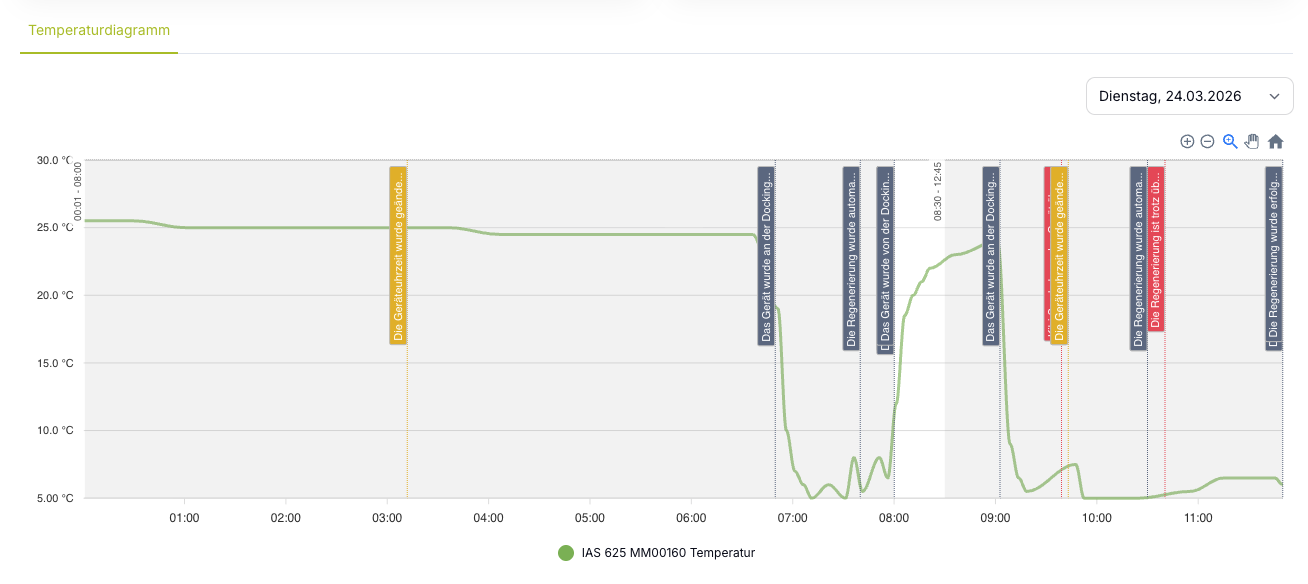
Sensors and devices from all relevant manufacturers on one platform
HACCP reports as PDFs at the touch of a button – audit-proof and multilingual
Alerts for threshold violations, escalating until action is taken
Ausgangslage
Why temperature monitoring often remains unnecessarily fragmented
The core issue isn’t that temperatures aren’t being measured—it’s that measurement, alerts, and documentation happen in too many separate worlds.
Temperature data lives across multiple manufacturer and documentation worlds.
When sensors, inventory equipment, and documentation operate in isolation, it creates significant manual effort and little confidence in the overall picture.
Daily HACCP documentation demands constant attention
Many companies still document temperatures using lists, standalone solutions, or delayed exports. This ties up time and creates gaps precisely where reliability matters most.
Deviations are often identified late or classified inaccurately.
Without continuous alarm logic, history, and device context, it’s unclear whether a fault is harmless, critical, or recurring.
Lösung durch Kibi Scada
How Kibi Scada turns temperature monitoring into a reliable solution
The solution combines device connectivity, documentation, and response logic to turn temperature data into a seamless operational process.
The cold and hot holding chain becomes visible on one platform
Kibi Scada consolidates sensors, manufacturer data, and location context so you no longer have to piece together temperature monitoring from individual solutions.
HACCP documentation is generated directly from day-to-day operations.
Reports, history, and timestamps are based on the same data that is centrally recorded in day-to-day operations. This turns documentation into a natural byproduct of a streamlined operational process.
Faster and more reliable response to threshold violations
Not only can deviations be detected, but their progression can be understood and linked to clear alert pathways. This visibly improves response reliability.
Ablauf im Betrieb
How the solution is used in everyday kitchen operations
From connection to daily overview to HACCP documentation—temperature monitoring stays in one consistent workflow. That’s what cuts effort and closes gaps.
Phase 01
01Connect sensors
Wireless sensors, wired probes, or existing device interfaces (OPC UA, Modbus, MQTT) are integrated without interfering with the electrical system.
Phase 02
02Centrally evaluate key values
Key metrics converge in a single dashboard. Thresholds, trends, and anomalies are visible per device, location, or device group.
Phase 03
03Generate an HACCP report
Select report parameters (time period, checklist), generate the report, download as PDF, or have it distributed automatically.
Sollwerte nach HACCP
HACCP temperatures at a glance
Kibi Scada stores these reference values per appliance as a setpoint and limit – and alerts automatically as soon as a value leaves the safe range.
| Area | Recommended setpoint | Note |
|---|---|---|
| Refrigeration (perishable goods) | 2–4 °C | no more than 7 °C |
| Minced meat | ≤ 2 °C | colder than other goods |
| Fresh fish (on ice) | 0–2 °C | keep near 0 °C |
| Poultry | ≤ 4 °C | maintain the cold chain |
| Frozen storage | ≤ –18 °C | do not interrupt |
| Hot holding / serving | ≥ 65 °C | continuously |
| Core temperature when heating | ≥ 70 °C · ~2 min | cook through safely |
Practical reference values; your operational HACCP specifications and product-specific requirements remain authoritative.
Passende Bausteine
Which Kibi Scada modules make this solution possible?
Temperature monitoring isn’t built on a single feature. It’s the interplay of visibility, alerting, and documentation that makes the solution truly effective.
Dashboard
Real-time data, historical trends, and device context—all accessible on a single surface.
Funktion ansehenAlerting
Threshold violations are linked to escalation logic and response pathways.
Funktion ansehenReporting
HACCP reports and temperature logs are generated from the same continuous data source.
Funktion ansehenTypische Einsatzbilder
Where temperature monitoring truly makes an impact
Four areas where seamless data and audit-proof documentation make all the difference.
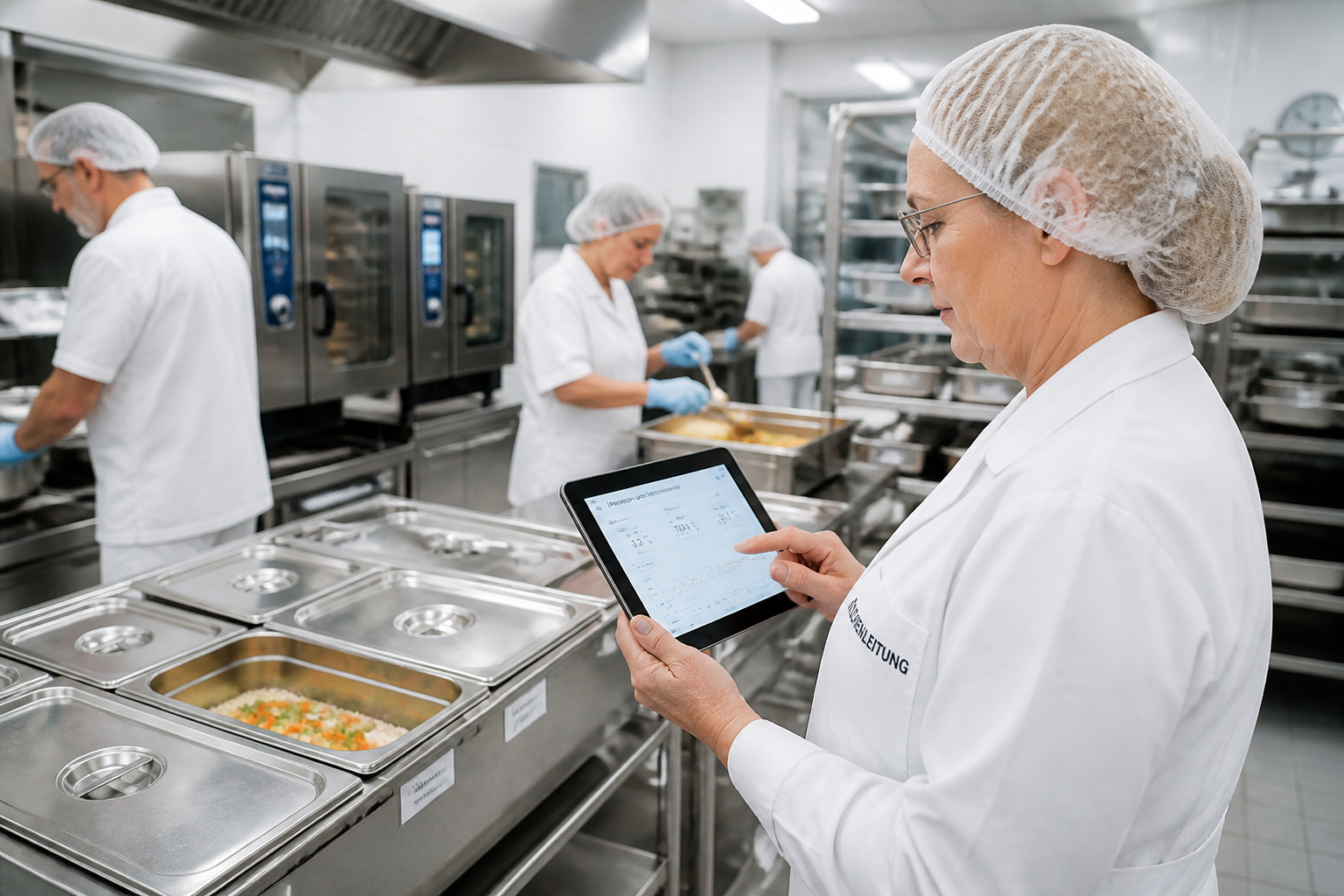
Hospitals
Temperatures of all refrigeration, freezer, and hot-holding zones documented in compliance with HACCP and clinical requirements.
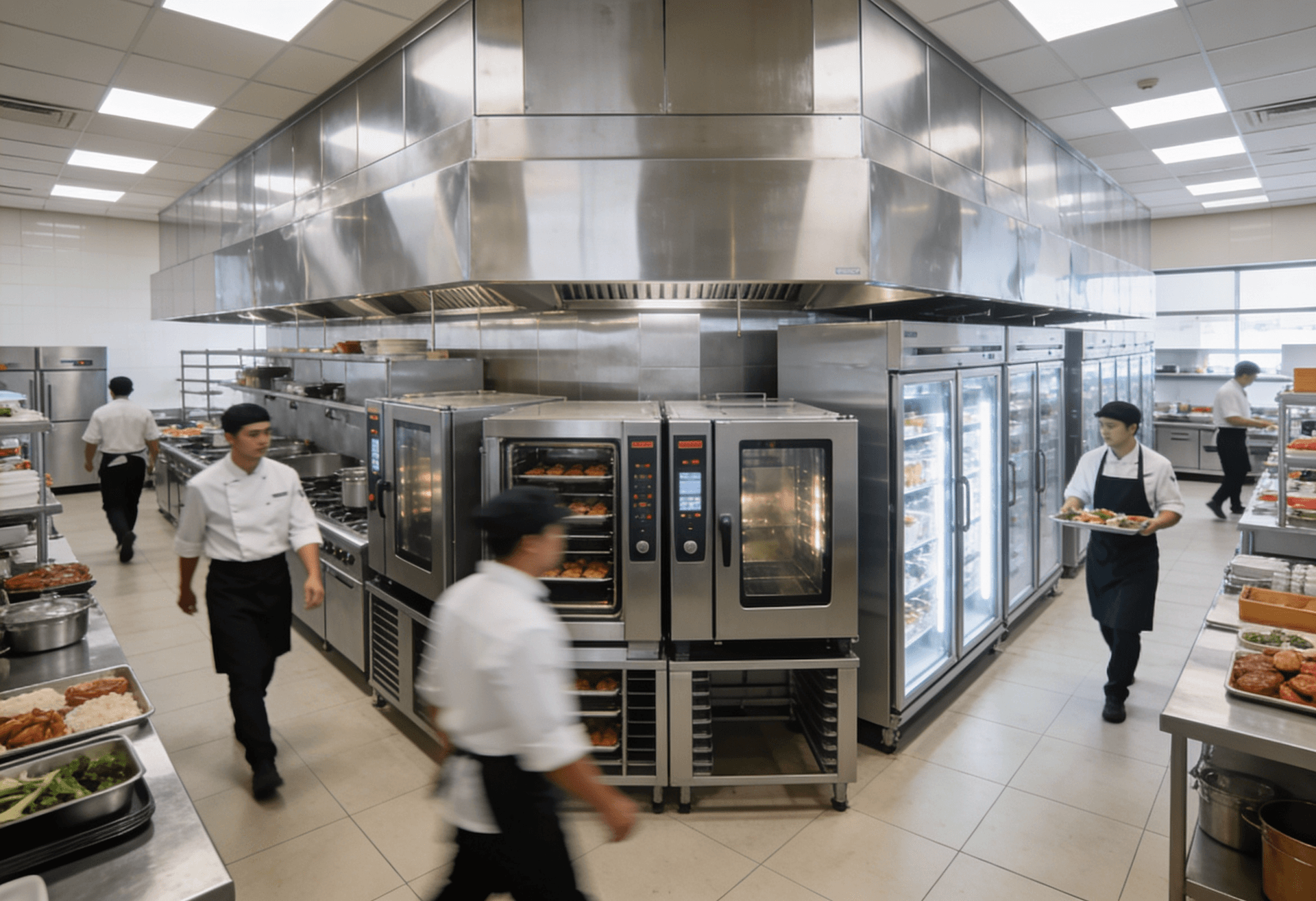
Large kitchens
Seamless monitoring from goods receipt through production to distribution—all in one interface.
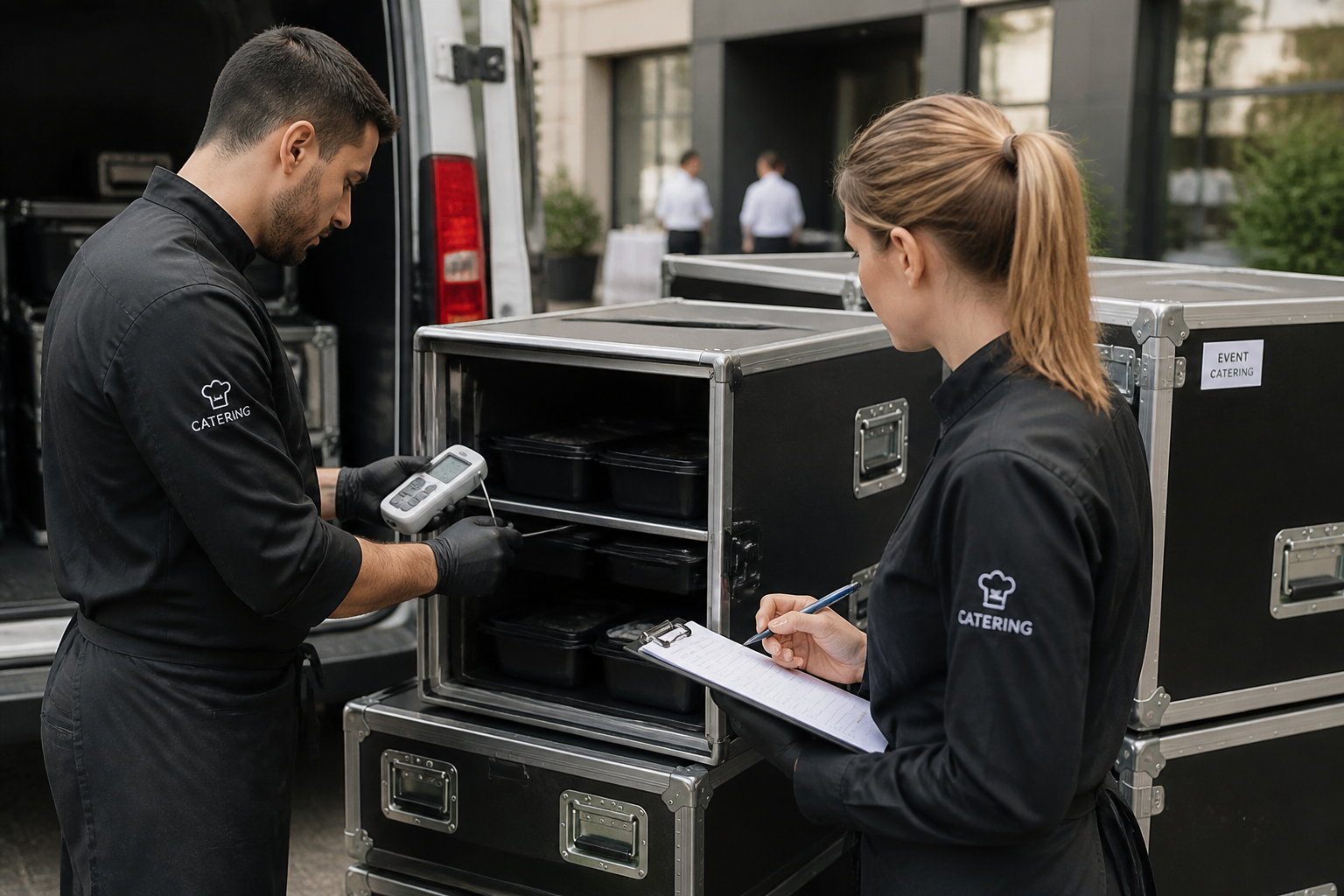
Catering
Support transport, events, and mobile distribution points with seamless cold chain documentation.
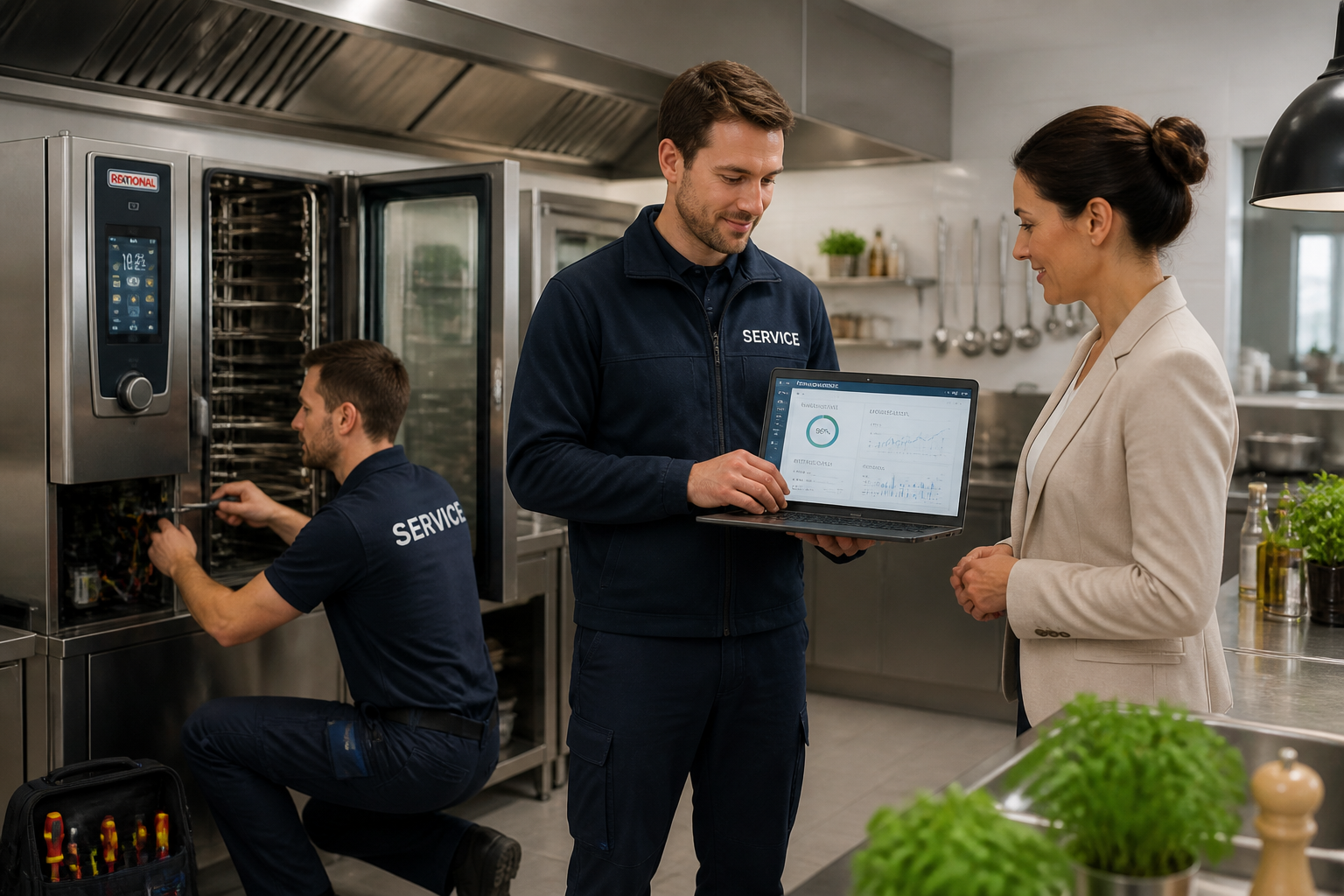
Service partners
Centrally manage multiple customer sites – temperatures, alarms, and maintenance status in one tenant.
FAQ
Frequently Asked Questions About Food Safety Without the Paperwork Chaos
How is temperature monitoring implemented in Kibi Scada?
Kibi Scada consolidates all temperature-related data sources in a large-scale kitchen—wireless radio sensors, wired PT100/PT1000 probes, and device data from connected manufacturers—into one platform. Values are continuously fed into the dashboard, checked against freely definable thresholds, and trigger the configured alert chain in case of deviations.
Which manufacturer devices can be directly integrated?
Directly supported are, among others, MenüMobil, Hupfer, MKN, RATIONAL, WINTERHALTER, VITO, CoolCompact, Shelly, Dragino, and KLAX. Additionally, almost any existing device can be connected via open industrial protocols (OPC UA, Modbus TCP/RTU, MQTT, LoRaWAN) without interfering with its control electronics.
How precisely and how often are measurements taken?
The sensors used measure with an accuracy of ±0.3 °C to ±0.5 °C, depending on the type and application—fully compliant with HACCP and EU Regulation (EC) No. 852/2004. Measurement intervals are freely configurable; by default, every 10 to 15 minutes, or even minute-by-minute for critical cold chains.
Are temperature logs audit-proof?
Yes. Every measurement is given an immutable timestamp and archived in German data centers for at least three years. The HACCP report generator creates PDF reports from any checklist for any period—individually at the touch of a button or via batch processing for multiple locations simultaneously.
In which languages are the interface and reports available?
Kibi Scada is available in German, English, Spanish, French, Italian, and Slovak. Selectable per user and per report – ideal for internationally operating businesses and multilingual teams.
What happens if the internet or sensors fail?
Gateways and sensors buffer measured values locally and transmit them automatically as soon as the connection is restored. If a sensor remains silent for too long, Kibi Scada independently triggers a connection alarm, ensuring the outage isn’t overlooked.
How can you manage multiple locations at once?
Devices can be organized into device groups, weekly schedules (e.g., hot-holding or regeneration programs) are created centrally and rolled out to multiple devices or locations simultaneously via batch processing. Service partners manage their customers within the same tenant model.
How often must the refrigerator temperature be checked and documented?
In commercial kitchens the refrigeration temperature should be checked and documented at least every working day – many businesses measure in the morning and evening. Continuous, automatic monitoring is more reliable: Kibi Scada measures continuously, documents seamlessly and reports limit deviations immediately, so no one has to read off and sign by hand.
What target temperature should a refrigerator have under HACCP?
Perishable foods are usually stored at no more than 7 °C; for many products 2 to 4 °C is ideal, while sensitive items such as minced meat (max. 2 °C) or fish (near 0 °C) must be kept colder. Frozen goods belong at -18 °C or below. Kibi Scada stores the right setpoint and limit values per appliance and alerts as soon as it gets too warm.
What cooking temperature is permitted under HACCP?
As a rule of thumb: heat food to a core temperature of at least 70 °C for about two minutes to reliably reduce critical germs. Kibi Scada records core-temperature measurements – including manual ones taken with a probe – and documents them directly at the relevant process step.
What temperature should food have when served under HACCP?
Food served hot should stay at at least 65 °C throughout, while food served cold should be kept cool (usually no more than 7 °C). Kibi Scada keeps hot-holding and refrigeration units in view, documents serving temperatures and alerts when a value drifts out of the safe range.
Where should a temperature sensor be placed?
The sensor belongs at a representative spot – ideally in the warmest area of the cold room or in a reference medium (e.g. a buffer bottle), so it reflects the product temperature rather than short-term air fluctuations. Right at the evaporator, the air outlet or the door you measure unrealistic values. Kibi Scada works vendor-open with compatible sensors and gateways.
How cold is a cold room or a cold cell?
Cold rooms are usually run between 0 and 7 °C depending on the goods – often around 2 to 4 °C; a freezer cell sits at -18 °C or below. What matters is the setpoint that fits the stored goods. Kibi Scada keeps several cold rooms and cells in view centrally in the control room, with its own setpoint and alert per location.
See the HACCP process with real kitchen data?
We’ll show you live how Kibi Scada links temperature monitoring, alerts, and reporting to turn regulatory documentation into a seamless operational process.

Persönlicher Ansprechpartner
Christofer Wesseling
Founder & Managing Director · Weslink GmbH
We show Kibi Scada live on your equipment, advise you personally on integration and onboarding, and support the rollout in your operation.
Last updated: